Welcome to HouLin Intelligent Engineering Co., Ltd website!

Hotline
Tel:
+86-371-55976059
Address:
2403, Block B, Longzihu Zhengshang Xuefu Square, Zhengdong New District, Zhengzhou City
On March 4, 2022, the National Energy Administration issued the "Summary of the Reply to Proposal No. 2325 of the Fourth Session of the Thirteenth National Committee of the Chinese People's Political Consultative Conference" and the "Summary of the Reply to Proposal No. 0835 of the Fourth Session of the Thirteenth National Committee of the Chinese People's Political Consultative Conference". Regarding hydrogen energy planning and technological innovation, the National Energy Administration will collaborate with the National Development and Reform Commission and the Ministry of Science and Technology to make corresponding deployments.
The Reply points out that the central government has provided support for renewable energy, including wind power and photovoltaic power generation, through additional subsidies for renewable energy prices. At the same time, the central government provides support for the promotion and application of fuel cell vehicles, the construction and use of charging (hydrogenation) infrastructure, and the research and development of hydrogen energy technology through energy-saving and emission reduction subsidy funds, central government science and technology plans (special projects, funds, etc.). Those who meet the requirements of relevant measures can actively apply for support.
For the subsequent support work of the hydrogen energy industry, the "Reply" has made the following plans:
1. The Energy Bureau, together with the National Development and Reform Commission, actively promotes the development of the hydrogen energy industry, strengthens overall planning, enhances top-level design, studies and formulates development plans for the hydrogen energy industry, and guides the standardized and orderly development of the hydrogen energy industry. The Energy Bureau is collaborating with the Ministry of Science and Technology to organize the research and development of the "14th Five Year Plan for Science and Technology Innovation in the Energy Field", focusing on the entire hydrogen energy industry chain and deploying technological innovation tasks; The Ministry of Science and Technology will deploy the national key research and development program "Hydrogen Energy Technology" during the 14th Five Year Plan period.
2. To promote the exploration of the commercialization path of the hydrogen energy industry, the Energy Bureau will work with relevant departments to promote the development demonstration of the hydrogen energy industry in key areas according to local conditions, and coordinate the promotion of diversified demonstration development of hydrogen energy in transportation, energy storage, distributed energy and other fields.
At the same time, the Energy Bureau released a response letter to the previous proposal from the Chinese People's Political Consultative Conference, stating that the National Energy Administration and relevant departments of the State Council attach great importance to the development of the hydrogen energy industry. The Energy Bureau is currently studying and formulating the "14th Five Year Plan" for scientific and technological innovation in the energy field, which will focus on the entire industry chain links such as efficient hydrogen production, storage and transportation, application, and fuel cells. It will research and deploy the key technological innovation tasks to be carried out during the "14th Five Year Plan" period, and develop a technical roadmap for each task.
Hydrogen Energy: The Ultimate Energy of the 21st Century
The international energy transition has always been carried out along the path from high carbon to low carbon, from low density to high density, and hydrogen, known as the "ultimate energy of the 21st century", is currently recognized as the most ideal energy carrier and clean energy provider.
Hydrogen energy is a clean, efficient, safe, and sustainable secondary energy source that can be obtained through various means. And it is in line with China's carbon reduction strategy, while also being conducive to solving China's energy security issues, making it an important medium for China's energy revolution.

The application of hydrogen energy can widely penetrate into various aspects of traditional energy, including transportation, industrial fuels, power generation, etc. The main technologies are direct combustion and fuel cell technology.
According to the International Hydrogen Council, by 2050, hydrogen energy will account for 18% of global energy terminal demand, creating a market value of over $2.5 trillion. Fuel cell vehicles will account for 20% -25% of global vehicles, and will become the main consumer of terminal energy systems alongside gasoline and diesel.
According to the China Hydrogen Alliance, hydrogen energy is expected to account for at least 10% of China's terminal energy system by 2050, with a hydrogen demand of nearly 60 million tons. Among them, 24.58 million tons of hydrogen are used in the transportation sector, accounting for about 19% of the energy consumption in this field. The production of fuel cell vehicles will reach 5.2 million vehicles per year.
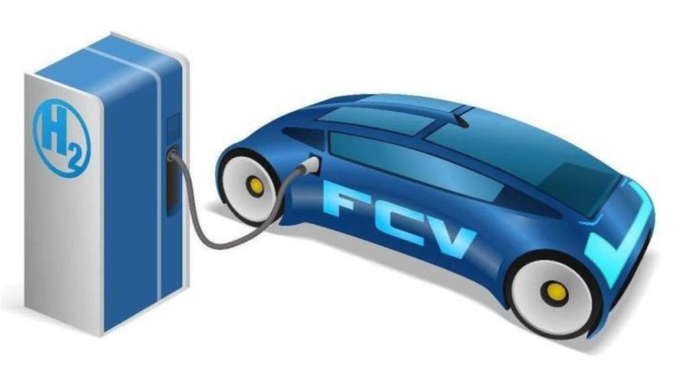
Hydrogen energy industry chain: covering the hydrogen energy end and fuel cell end
Hydrogen energy industry chain: hydrogen energy end
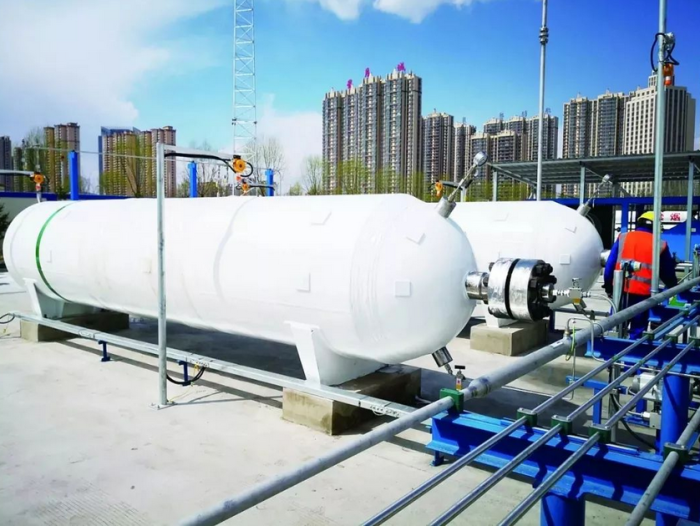
Hydrogen storage
The ability to store and transport hydrogen on a large scale is an important characteristic that distinguishes it from chemical battery energy storage. Under the premise of unconstrained total resources and controllable production costs in the medium to long term, the storage performance and transportation efficiency of hydrogen are bottleneck issues in the construction of hydrogen energy networks.
At present, hydrogen storage mainly includes three methods: gaseous hydrogen storage, liquid hydrogen storage, and solid hydrogen storage. High pressure gaseous hydrogen storage has been widely used, while low-temperature liquid hydrogen storage has been applied in aerospace and other fields. Organic liquid hydrogen storage and solid hydrogen storage are still in the demonstration stage.
In the hydrogen storage sector, major domestic manufacturers include Cryogenic Corporation (Cryogenic Liquid Hydrogen Equipment, Liquid Hydrogen Storage Tanks, Hydrogen Storage Systems); Furuite installation (vehicle mounted high-pressure hydrogen supply system and refueling equipment); Beijing Stock (car mounted gas cylinders, seamless steel gas cylinders, welded steel gas cylinders, welded insulated gas cylinders, carbon fiber fully wrapped carbon composite gas cylinders); Zhongma Technology (glass fiber products such as rovings, fine sand, short cut fibers, alkali resistant fibers, and woven fabrics).
Hydrogen transportation
The networked distribution of hydrogen refueling stations is the basic guarantee for the large-scale commercialization of hydrogen fuel cell technology, and the key to solving the networked distribution of hydrogen refueling stations is to solve the problem of hydrogen transportation.
Hydrogen is in a gaseous state at room temperature and pressure, with a density of only 0.0899 kilograms per cubic meter. As a flammable gas, it belongs to Class A dangerous goods (non fuel) and can form explosive mixtures when mixed with air. It can explode when exposed to heat, so it has high requirements for transportation safety.
At present, there are three main modes of hydrogen transportation: gaseous transportation, liquid transportation, and solid transportation.
The demonstration application of hydrogen energy in China mainly focuses on the layout near industrial by-product hydrogen and renewable energy hydrogen production sites (less than 200 kilometers), and hydrogen energy storage and transportation are mainly carried out in high-pressure gaseous form.
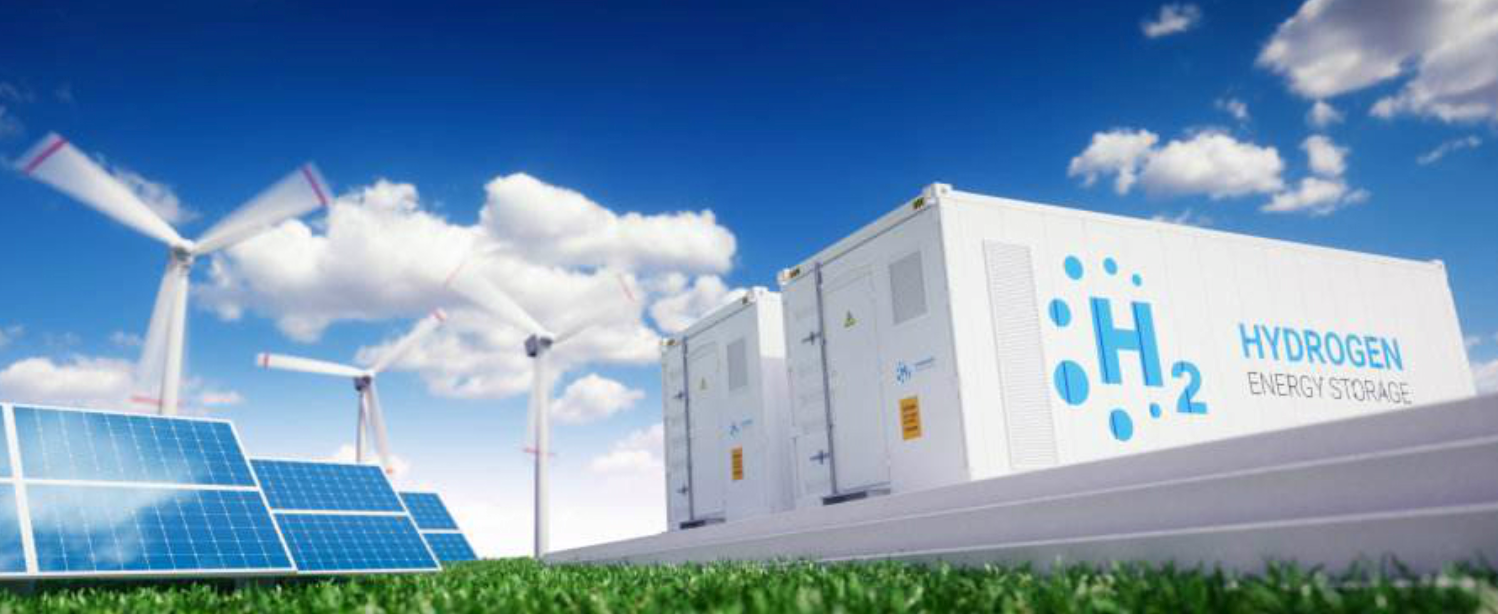
Hydrogen refueling station
The infrastructure for industrial development takes the lead. Hydrogen refueling stations and hydrogen, as important raw materials and infrastructure for the fuel cell vehicle industry, are the hub for upstream hydrogen production and downstream users in the hydrogen energy industry. Their layout and construction are the breakthrough points for the commercial development of fuel cell vehicles.
The number and popularity of hydrogen refueling stations largely determine the industrialization process of hydrogen fuel cell vehicles, and low-cost hydrogen production and transportation are also key links in the further popularization and promotion of hydrogen fuel cell vehicles, determining the economic viability of driving costs.
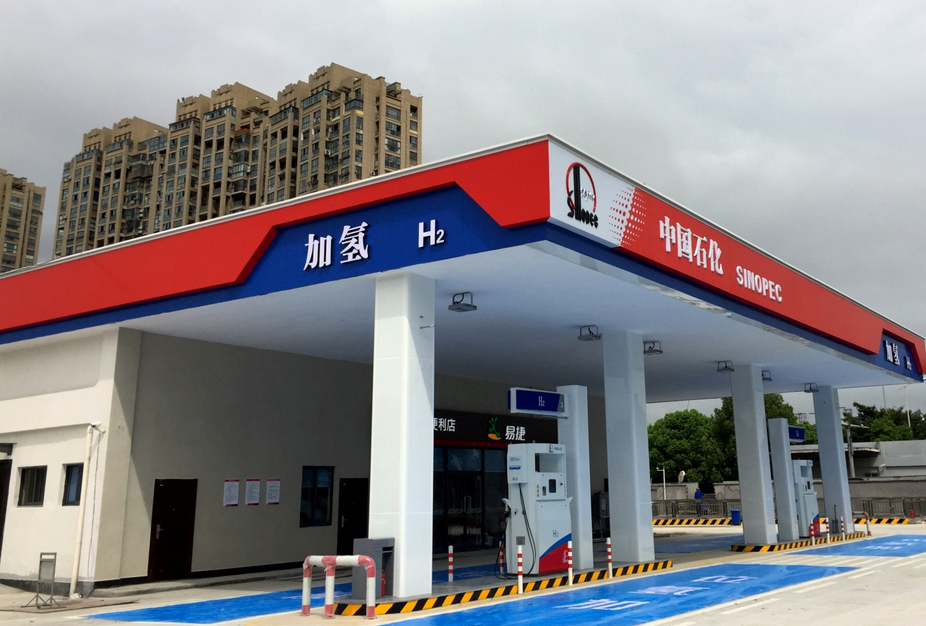
Domestication of hydrogen refueling stations gradually begins
Although the technical indicators of hydrogen refueling station equipment produced in China are still lacking, localization has already begun, and industry enterprises have launched independent products in various fields.
Houpu Corporation provides complete sets of hydrogen refueling station equipment, covering design, component research and development, production, complete equipment integration, hydrogen refueling station installation and commissioning, and after-sales service; CIMC Anruike won the bid for the National Energy Group's 70MPa hydrogen refueling station project on January 7, 2021; Hongda Xingye is already operational and has built and operated China's first civilian liquid hydrogen processing plant in Inner Mongolia; Jiahua Energy is an integrated operation enterprise for by-product hydrogen purification, transportation, and refueling stations, and cooperates with Guotou Juli.
Hydrogen energy industry chain: fuel cell end
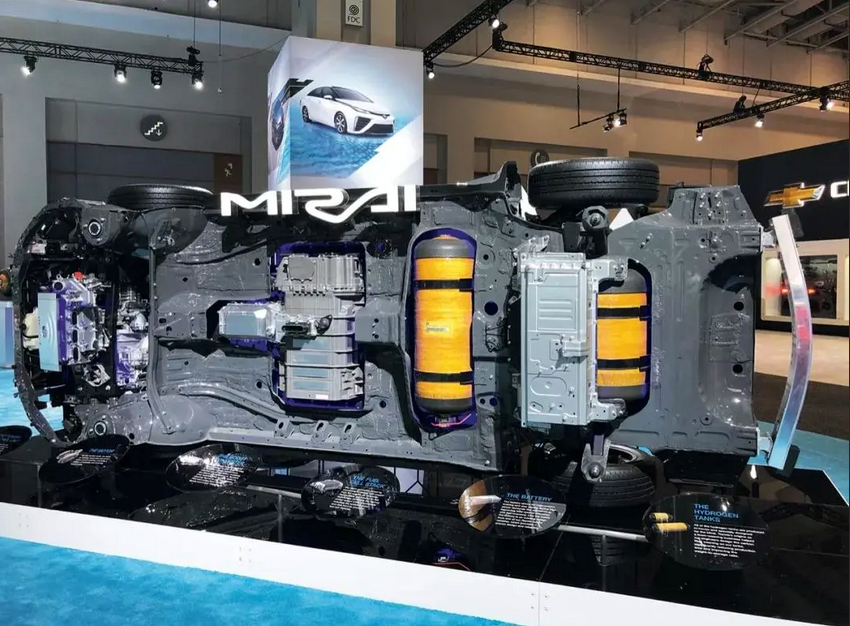
Gas diffusion layer
The gas diffusion layer is located between the flow field and the catalytic layer, and its function is to support the catalytic layer, stabilize the electrode structure, and have the function of conducting mass/heat/electricity.
Most foreign manufacturers have achieved large-scale production of gas diffusion layers and have a variety of products suitable for different application scenarios, including Japan's Toray, Germany's SGL, and Canada's AVCarb.
The domestic gas diffusion layer is still in the preparation stage of primary carbon microporous layers.
Bipolar plate
Bipolar plates are the cathode and anode plates of fuel cells, which function to conduct electrons, distribute reaction gases, and carry away generated water.
The bipolar plate materials commonly used in fuel cells include graphite carbon plates, composite bipolar plates, and metal bipolar plates. Due to space limitations in vehicles (especially passenger cars), fuel cells are required to have high power density.
Therefore, relatively thin metal bipolar plates have better application prospects.
The domestic graphite bipolar plate technology has developed rapidly in recent years, and its technical level is comparable to that of foreign countries, but the thickness is usually above 2mm. Composite film pressed carbon plates have broken through the 0.8mm thin plate technology abroad and have the same volumetric power density as metal plates.
At present, in the development of thin carbon plates in China, Guohong has authorized technology from Ballard Company in Canada. The pure domestic composite membrane pressed carbon plate is in the research and development stage, and it is expected to start mass production of 1mm thin plates in 2021.
Antai Technology is involved in both the gas diffusion layer and the bipolar plate.
Compared with domestic and foreign fuel cell stacks, there are still shortcomings in core materials and key technologies in domestic fuel cell stacks, which is also the main reason for the high cost of fuel cell stacks.
The three key materials of the membrane electrode layer, P/t catalyst, proton exchange membrane, and carbon paper, mainly rely on imports, and domestic materials are still unable to meet the demand for high-performance fuel cell stacks
In terms of current collector bipolar plates, graphite bipolar plates have been developed for many years and are comparable to foreign technology, but the development of low-cost and lightweight metal bipolar plates is still blank.
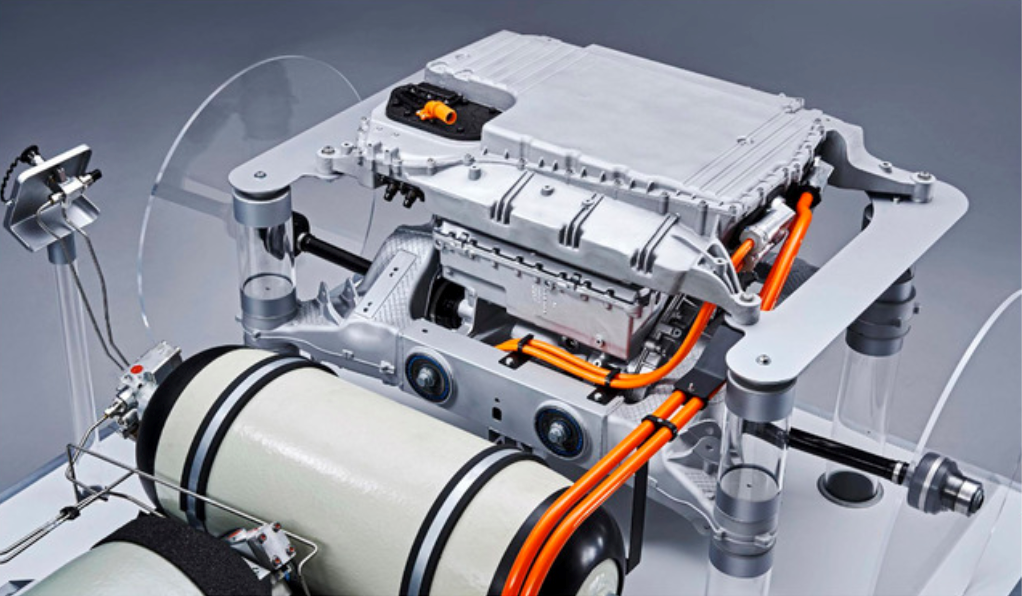
Midstream of Fuel Cells: Fuel Cell Stack
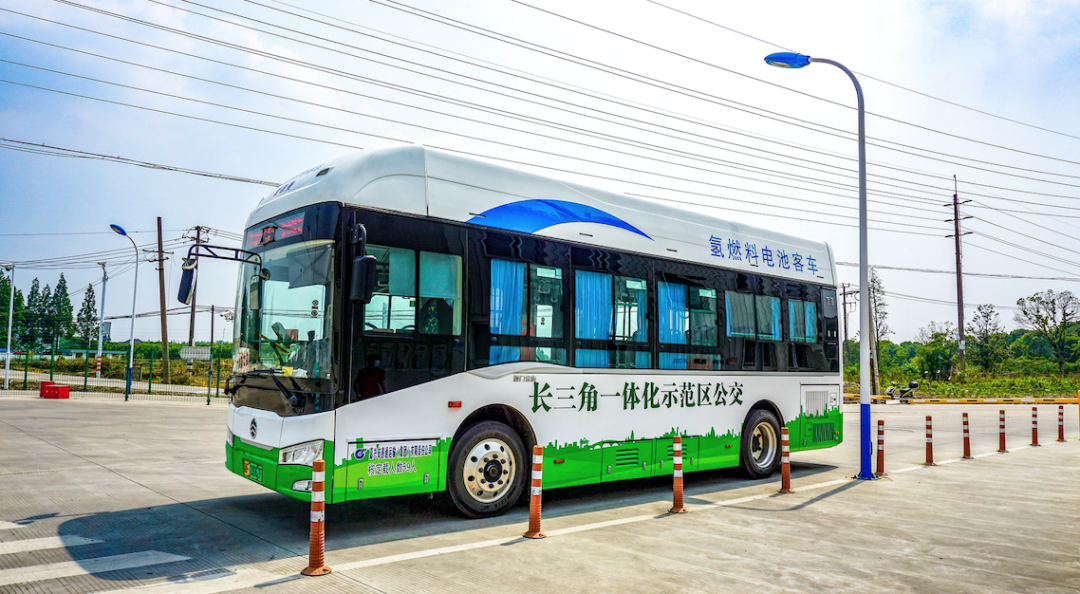
At present, fuel cell vehicles in China have entered the early stage of commercialization. As of the end of 2020, the number of fuel cell vehicles in China was 7352.
In September 2020, five departments including the Ministry of Finance, the Ministry of Industry and Information Technology, and the Ministry of Science and Technology jointly issued the "Notice on Carrying out Demonstration Applications of Fuel Cell Vehicles", clarifying that during the demonstration period of fuel cell vehicles, a "reward instead of subsidy" approach will be adopted to reward the city clusters that have been shortlisted for the demonstration according to their achievement of goals.
During the 4-year subsidy support period, fuel cell vehicles have basically achieved parity with benchmark fuel vehicles after subsidies, stimulating the demand for market-oriented vehicle procurement, promoting the industry to take the first step towards scale, entering a virtuous cycle of cost reduction and volume increase, and accelerating the arrival of the parity stage.
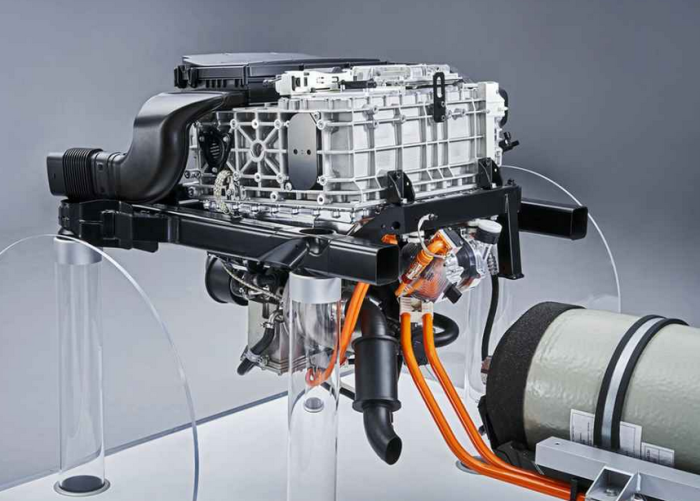
The promotion and application prospects of hydrogen fuel cell vehicles not only depend on the progressiveness, maturity and cost of the whole vehicle technology, but also are closely related to the maturity and development potential of the hydrogen energy chain including hydrogen production, hydrogen storage, hydrogen transportation and hydrogen refueling stations.
To achieve the commercialization of fuel cell vehicles without subsidies, it is necessary to significantly reduce the cost of fuel cell engines and hydrogen, while also lowering the construction cost of hydrogen refueling stations.
Deloitte analysis data shows that the total cost of hydrogen fuel cell buses in China (TCO, purchase cost, and operating cost) was $178 per 100 kilometers in 2019, and it is expected to decrease to $55 per 100 kilometers by 2029, which will be lower than the cost of pure electric buses and fuel buses.
From the current cost of purchasing and using fuel cells, in addition to the significant potential for cost reduction of vehicle related components such as fuel cell systems, technological advancements in hydrogen production and storage, as well as the promotion of infrastructure, are also important factors in promoting fuel cell vehicles.
Therefore, policy support in the early stages of industrial development is particularly important. Under policy support, the industry enters a virtuous cycle of scale reduction and market expansion. In addition, continuous technological progress will also feed back to solve the cost constraints of core technologies in various links, further enhancing commercial competitiveness.